
A Girl on a Train
Play A Girl on a Train
A Girl on a Train Screenshots





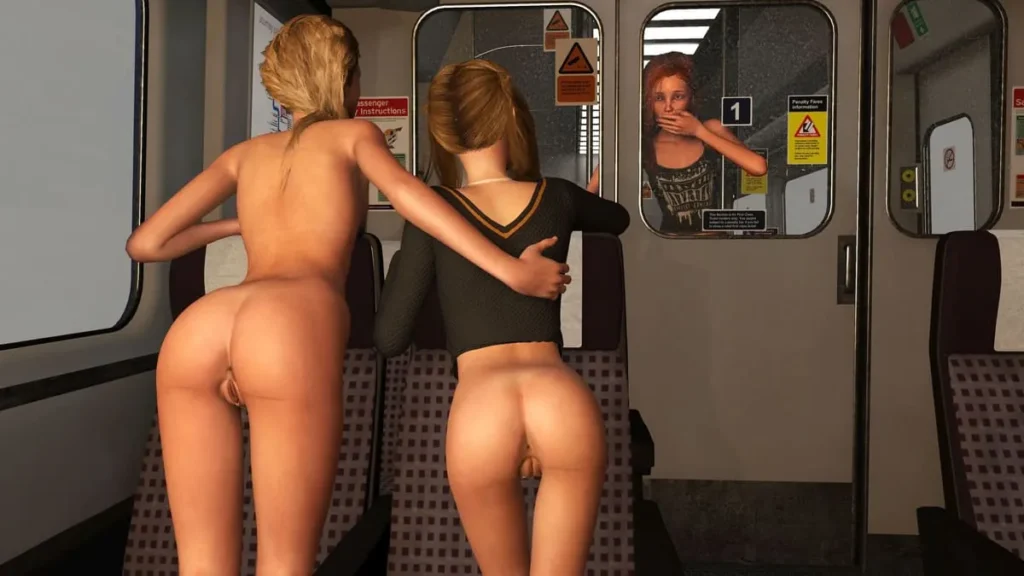

A Girl on a Train review
Explore the immersive visual novel experience with gameplay mechanics, story elements, and player choices
A Girl on a Train stands out as a compelling adult visual novel that combines psychological thriller elements with intimate drama. Released in 2022 by Dumb Koala Games, this interactive narrative experience places you in the role of a protagonist whose daily train commute becomes the setting for an intriguing mystery. The game’s unique approach to storytelling emphasizes player agency, where your decisions shape the narrative direction and character relationships. With its blend of engaging plot twists, detailed character development, and meaningful choices, A Girl on a Train offers an immersive gaming experience that keeps players invested in uncovering the truth behind the enigmatic central character.
Understanding the Game’s Story and Setting
Ever found yourself lost in thought, staring out a window, and constructing whole lives for the strangers you glimpse? 🚉 That idle daydream is the electrifying premise at the heart of A Girl on a Train. This isn’t just a game you play; it’s an experience that gets under your skin, tapping directly into that universal curiosity about the lives of others. I remember playing it late one night, the room dark except for the screen, and feeling a genuine chill—not from a jump scare, but from the slow, creeping realization of just how deep the mystery goes. If you’re ready to trade action for atmosphere and puzzles for profound psychological tension, you’re in the right place.
Let’s pull back the curtain on the compelling A Girl on a Train story, its masterful visual novel narrative, and the intricate web of character relationships that makes every choice you make feel vitally important. 🕵️♀️
The Core Narrative: Mystery and Intrigue on Rails
Your journey begins in the most mundane way possible: a daily commute. You play as a protagonist whose life feels stuck on a loop, each blurry landscape from the train window mirroring the monotony of their own existence. That is, until you notice her—Elara. Every day, at the same time, your train passes her picturesque backyard, and you see her living what appears to be a perfect, sun-drenched life. It’s a silent, beautiful painting you observe from a distance.
This is where the genius of the A Girl on a Train story truly unfolds. The game brilliantly makes you, the player, an active voyeur. Your initial fascination is something we’ve all felt. But A Girl on a Train twists that feeling into the core of its psychological thriller gameplay. You’re not just watching; you’re investigating. You start to note patterns, then irregularities. A missing garden chair one evening. A frantic, hushed argument glimpsed through a window the next. A strange man—Mr. Thorne—lurking near her property line.
The game’s greatest trick is making you complicit. Your curiosity is the engine driving the entire plot forward.
Suddenly, Elara vanishes. The perfect painting is now an empty, haunting frame. Your private obsession becomes a public crisis, and you’re left holding fragments of a life you never actually knew. Do you come forward with your stalker-like knowledge? Do you trust the official investigation led by the skeptical Detective Miller? The interactive story choices here are agonizing and deeply personal. Revealing everything might help find Elara, but it also exposes your own unsettling behavior. Staying silent lets you investigate alone, but can you live with the consequences if you’re wrong?
This mystery visual novel masterfully builds tension not with ghosts or gore, but with psychological unease. The narrative cracks appear slowly, making you question your own perceptions. Was Elara in danger, or was she the danger? Was her life a dream, or a carefully constructed prison? The game forces you to grapple with themes of observation, morality, and the stark difference between seeing and truly knowing someone. Every clue you piece together feels earned, and every revelation recontextualizes everything you thought you understood.
Character Development and Relationship Dynamics
The power of this visual novel narrative doesn’t come from a sprawling cast, but from the intense, nuanced focus on a handful of deeply crafted individuals. Your choices don’t just alter a plot branch; they fundamentally reshape your connection to each character, making this a profound character relationships game.
-
The Protagonist (You): Your character is the ultimate blank slate, yet brilliantly defined by your actions. Are you a concerned citizen, an obsessive admirer, or a would-be hero playing detective? The game’s game character development is your development. Your personality is sculpted by every decision, from how you speak to Detective Miller to what you choose to focus on in your daily observations. I found myself pausing before major choices, really asking, “Who do I want to be in this story?” That level of personal investment is rare.
-
Elara, The Enigma: Elara is the sun around which this entire solar system orbits, yet she remains tantalizingly out of reach. You learn about her entirely through second-hand accounts, your own glimpses, and the artifacts of her life. This design is a stroke of genius. It makes her a mystery to be solved, but also a mirror. The “Elara” you build in your mind says more about you than about her. Is she a victim, a femme fatale, or something else entirely? Unraveling her true self is the heart of the psychological thriller gameplay.
-
Detective Miller, The Official Channel: Miller is the dose of cold, hard reality. Skeptical, overworked, and deeply suspicious of your “train-window” evidence, he represents the official world crashing into your private investigation. Your relationship with him is a constant tightrope walk. Build trust by providing credible, well-reasoned clues, and he may become a valuable, if reluctant, ally. Come across as an unhinged stalker, and he’ll see you as a suspect or a nuisance to be managed. This dynamic forces you to critically evaluate your own findings.
-
Mr. Thorne, The Mysterious Neighbor: If Elara is the puzzle, Mr. Thorne is the most ominous piece. His presence is a constant source of tension. Is he a concerned neighbor, a creepy voyeur like you, or something far more sinister? Engaging with him is always a risk. He might offer a crucial piece of the puzzle that shifts your entire theory, or he might be deliberately leading you down a dark and dangerous path. Managing this relationship is where the game’s tension often peaks.
Your interactive story choices with these characters are rarely simple “good vs. evil” picks. They are complex negotiations of trust, information, and personal ethics. Choosing to share a specific detail with Miller might shut down a line of inquiry with Thorne. Deciding to defend Elara’s character might make you seem biased and unreliable. The game made me sit back multiple times, weighing not just what I wanted to know, but who I needed to be to these people to learn it.
| Character | Primary Role | Relationship Dynamics & Player Choice Impact |
|---|---|---|
| The Protagonist | Player Avatar & Investigator | Your morality and methods are defined entirely by your choices, shaping the narrative’s tone and available paths. |
| Elara | The Central Mystery | Your perception of her drives the investigation. Choices determine how her story is uncovered and ultimately interpreted. |
| Detective Miller | Official Authority | Choices build trust or suspicion. High trust unlocks official resources; low trust isolates you and raises hostility. |
| Mr. Thorne | The Wild Card | Engaging with him is high-risk, high-reward. Choices can gain a unique ally or make a powerful, unpredictable enemy. |
How the Train Setting Enhances the Experience
In most games, a train is just a vehicle to get from point A to point B. In A Girl on a Train, the train is the stage, the catalyst, and a character in itself. 🚂 The developers didn’t just pick a random location; they chose a setting that actively shapes every part of the visual novel narrative.
First, it creates a powerful, contemplative rhythm. The daily commute provides a forced, structured downtime. There are no side quests or open worlds to distract you. For those few minutes of in-game time each day, you are alone with your thoughts and that singular, fixed view. This rhythm builds a hypnotic routine that makes the smallest deviation—a missing item, a new person in the yard—feel like a seismic event. It trains you to become a better observer, mirroring the protagonist’s own growing obsession.
Second, the setting is a masterclass in spatial and psychological limitation. You are a ghost, passing by. You can see, but you cannot hear. You can speculate, but you cannot interact. This physical barrier is the source of all the game’s tension and curiosity. It turns every glimpse into a precious data point that you must desperately try to interpret. You’re solving a jigsaw puzzle where most of the pieces are hidden, and the ones you have are viewed from a moving vehicle at a distance. This limitation fuels the psychological thriller gameplay by making the player feel the same frustration and desperate curiosity as the protagonist.
Finally, the train symbolizes the journey itself—both the physical commute and the metaphorical journey into the mystery. The forward motion contrasts with the circular, stuck feeling of the protagonist’s life and the investigative process, which often feels like going in circles. The windows of the train act as both a literal frame for the mystery and a metaphorical one, representing the limited, subjective perspective you have on the lives of others. You think you’re seeing the whole picture, but you’re only ever seeing a sliver.
This brilliant use of setting elevates A Girl on a Train from a simple mystery to an immersive meditation on perception itself. It asks you: How well can you ever truly know someone from the outside looking in? And what are you willing to do to bridge that gap? Your interactive story choices are your answers to those haunting questions.
By weaving together a gripping A Girl on a Train story, a sophisticated visual novel narrative, and deep, choice-driven character relationships, this game offers an experience that stays with you long after the final scene. It proves that the most powerful thrills don’t come from what jumps out at you, but from what slowly, patiently, unravels within you. Whether you’re a fan of psychological thriller gameplay or just love a mystery visual novel that respects your intelligence, this is one journey you need to book a ticket for.
A Girl on a Train delivers a sophisticated adult visual novel experience that prioritizes narrative depth and meaningful player agency. The game’s psychological thriller framework, combined with its emphasis on character-driven storytelling and consequential decision-making, creates an engaging experience for players seeking interactive narratives with mature themes. From its well-crafted characters and compelling plot twists to its intuitive gameplay mechanics and quality visual presentation, the game offers substantial value within the visual novel genre. Whether you’re drawn to mystery-driven narratives, character exploration, or interactive storytelling where your choices genuinely matter, A Girl on a Train provides an immersive journey that rewards thoughtful engagement with its branching storylines and complex moral dilemmas.